
...
Select a Country
Search Results
KOKU” (5)

Sorry, we couldn't find the content you were looking for.
Want to try another word or term?

Logo

Green Crescent Addiction Prevention Training Program Returns with Online Training in 2025

Calendargraymini

24.09.2025

Green Crescent Addiction Prevention Training Program Returns with Online Training in 2025

The International Federation of Green Crescent (IFGC) is pleased to announce the return of the Green Crescent Addiction Prevention Training Program, a society-based global preventive training initiative. TBM has been updated to feature interactive, easy-to-apply, and dynamic content. Following its last online edition in July 2023, this will be the first international training delivered with the updated content.

📌 Training Date: 4–5 October 2025 | 09:30 to 17:15 Turkey Time (GMT+3).

📌 Deadline for submission: October 1, 2025

📌 Program agenda will be shared at a later date.

📌 Training program will be in English [Spontaneously translated to French by AI].

📌Eligibilty Criteria  

  • Country Green Crescent representatives
  • Professionals working in collaboration with the IFGC, including psychologists, psychiatrists, healthcare workers, educators, related professionals.

Applications from other professionals not currently working with IFGC or Country Green Crescents will be considered based on capacity.


ADDICTION PREVENTION TRAINING PROGRAM

The Green Crescent Addiction Prevention Training Program (TBM) is a primary prevention program developed by the Green Crescent in 2014, consisting of modules on technology, gambling, tobacco, alcohol, and substance addictions, and healthy living. It is designed to raise awareness across the whole society on these issues, with a special focus on children and young people, while also training volunteer trainers who can further disseminate the program.

This training is open to Country Green Crescent representatives and professionals working in collaboration with the IFGC (psychologists, psychiatrists, healthcare workers, educators, and related professionals). Applications from other professionals not working in collaboration with the IFGC or the Country Green Crescents will be accepted based on capacity.

Upon successful completion of the training, participants will be certified as practitioners of the program, authorized to deliver its content to their local participants.

Following the training, all participants are expected to implement the TBM program in their communities. Their activities will be monitored once throughout the year to ensure effective application and continuity of the program.

Aim

The aim of TBM is to prevent alcohol, tobacco, substance, gambling and technology addictions and to raise awareness on healthy living among the entire society, especially children and youth. The objectives of the program are as follows:

  • Raise society awareness of preventing addictions,
  • Contribute to a safe, and healthy lifestyle in the society,
  • Improve acknowledgment on alcohol, tobacco, substance use disorders, and other risky behaviours, gambling, and technology addictions,
  • Advocate protective, and preventive approach.
  • Train volunteer trainers to deliver and disseminate the program in their communities

The Green Crescent Addiction Prevention Training Program provides modules designed for different stages, such as pre-school, primary school, secondary school, high school, and adults, starting from the age of 4.

The TBM implementation materials were authored by renowned experts, and academics in the field. All TBM training content is based on solid, and reliable scientific foundations.

Tools

  • Books, guides, brochures, presentations, posters, short films, additional materials
  • Distance learning system, Education Portal (tbm.org.tr), animations (videos)

Outcomes

Through the TBM Practitioner Training for Country Green Crescents, it is expected that participants will conduct local awareness trainings in their own countries using TBM modules, thereby expanding the program’s impact at the national level. The training also aims to strengthen the expert capacity of Country Green Crescents in delivering addiction-related education, while enhancing the international visibility and effectiveness of the Green Crescent.

The program consists of the following sessions:

  • Introduction to Green Crescent Prevention Efforts and TBM,
  • Addictions in a Changing World, Chemical Addictions,
  • Behavioral Addictions,
  • Principles of Implementing Adult Training Content,
  • Prevention Perspective and Healthy Living in Addictions,
  • Applications of Adult Training Content,
  • Effective Presentation Techniques,
  • and Participant Presentation Practices.

In this context, the training is designed not only to provide knowledge but also to improve participants’ skills in effective presentation techniques and adult education.

Important Note
To receive certification, participants must attend all training sessions and pass the final exam


📌 Addiction Prevention Training Program is free of charge.

📌 If you have any questions about the program, you can contact us at info@ifgc.org 


More Latest News

...

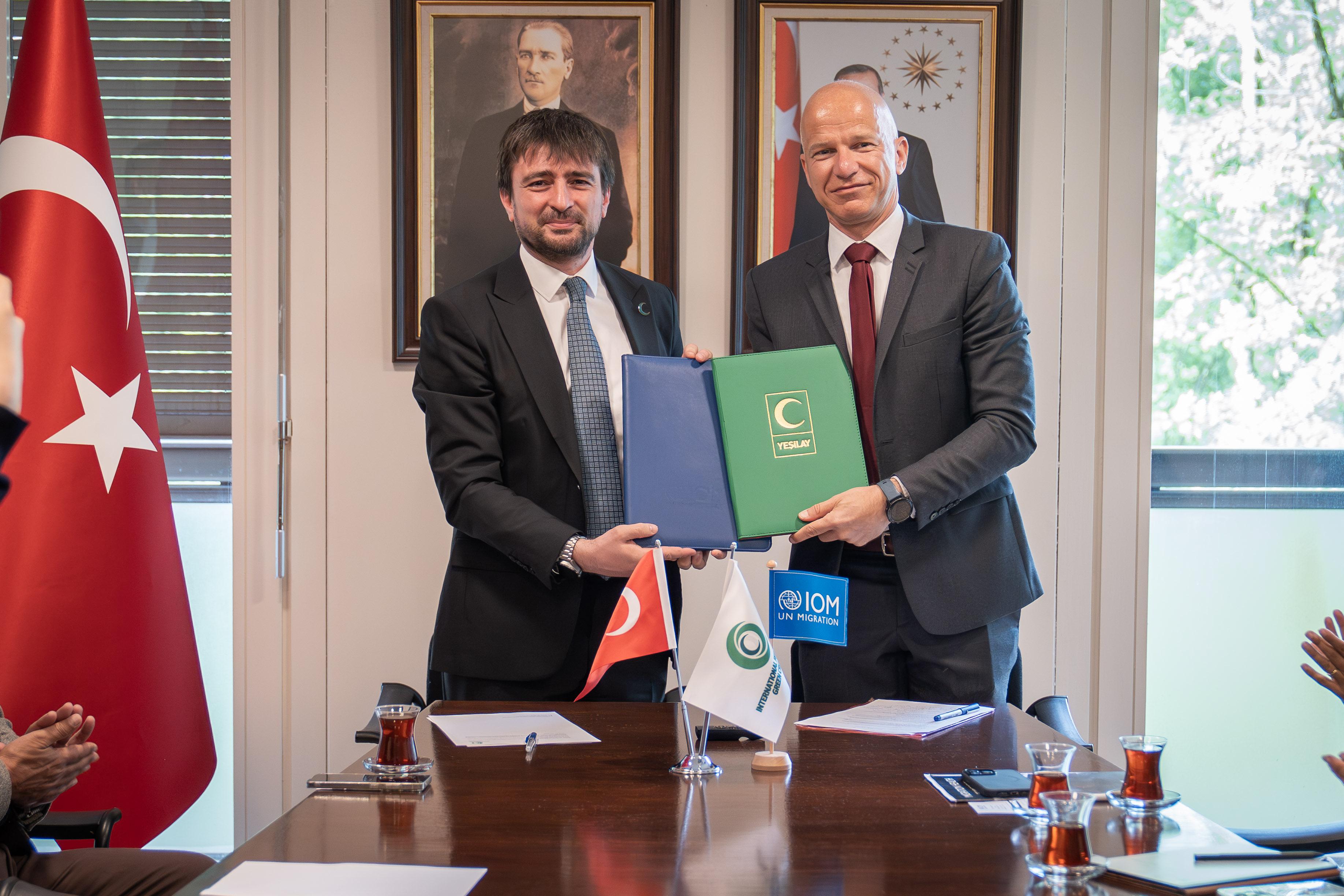
In an important step for global public health and humanitarian response, the International Federation of Green Crescent (IFGC) and the United Nations (UN) International Organization for Migration (IOM) have signed a comprehensive agreement. This Memorandum of Understanding (MoU) creates a official partnership to bring together addiction prevention work with mental health and psychosocial support (MHPSS) for migrants, refugees, and communities affected by crises. The official signing ceremony took place at the Permanent Mission of Türkiye to the United Nations Office in Geneva. The event was attended by Ambassador Dr. Mehmet Güllüoğlu, Vice President of the Turkish Green Crescent and Secretary-General of the IFGC, and Vincent Houver, IOM Director of the Department of Mobility Pathways and Inclusion, along with representatives from both institutions. This agreement does not mark the start of a brand-new relationship. Instead, it makes a long-standing partnership official and permanent. For years, Green Crescent Counseling Centers (YEDAM) have worked closely with the IOM on the ground, helping vulnerable communities fight addiction and mental health issues. This new MoU turns those local efforts into a structured, global alliance. STATEMENTS FROM LEADERS ON THE HUMANITARIAN NEEDS Speaking at the ceremony in Geneva, Ambassador Dr. Mehmet Güllüoğlu emphasized that this agreement is much more than just a routine official document, stating: "This ceremony reflects a joint commitment to support vulnerable and displaced communities through prevention, recovery, psychosocial well-being, and inclusive community-based approaches." Dr. Güllüoğlu drew attention to the current global situation, noting that millions of young people around the world are growing up under the shadow of wars, natural disasters, forced migration, and social instability. He explained that these crises do not just force people to leave their homes; they also break social bonds, weaken mental strength, increase isolation, and deeply hurt emotional well-being. Speaking about the expanding scope of addiction, Dr. Güllüoğlu said: "As IFGC, we believe it is becoming increasingly important that addiction prevention cannot be separated from broader discussions about well-being, resilience, inclusion, and human dignity. This includes not only substance addiction such as alcohol and drugs, but also behavioral addictions like gambling, gaming, and problematic technology use. These can become even more visible during periods of displacement, uncertainty, and social isolation." Representing the United Nations, IOM Director Vincent Houver acknowledged that public health—especially specialized fields like addiction treatment—is often underfunded and undervalued in global humanitarian response. Welcoming the partnership with the IFGC, Houver noted: "Unfortunately, drug and substance use, along with other addictive behaviors, crosscut very frequently with our work, but I think this is a reality of the humanitarian field. Drug use and substance addiction hinder the integration of migrants into host societies and present significant barriers that prevent them from successfully reintegrating and achieving social cohesion with the community when they return to their countries." Houver also highlighted that since humanitarian needs are growing globally while international budgets are shrinking, the wide network of the IFGC is incredibly valuable to the United Nations: "As humanitarian needs continue to increase globally, while resources tend to decrease, IOM is proud to partner with IFGC to strengthen prevention and access to care among migrants and host communities." Concluding his speech, Houver praised the leading role of Türkiye and the Green Crescent on the world stage: "Türkiye is an invaluable and strong partner for IOM, one of the key member states of IOM. Therefore, it is a matter of great pride for us that you represent Türkiye today, being here as civil and permanent representative. Türkiye is an absolutely indispensable partner for IOM in the field of migration and in the field of humanitarian assistance in general. Therefore, we are very proud to be able to partner with you today in this special setting." TECHNICAL SCOPE AND STRATEGIC PILLARS OF THE AGREEMENT The partnership focuses on four main strategic areas: sharing expertise by contributing to each other's international training programs on mental health, intercultural communication, and substance use disorders; launching joint research and pilot initiatives to study areas of shared interest; exploring new ways to share program information at the country level to improve field coordination and facilitate safe healthcare referrals; and exchanging specialized technical resources—such as clinical protocols, training tools, and guidance documents—on a case-by-case basis while fully respecting intellectual property rights and confidentiality frameworks.  To ensure safe field operations, the agreement introduces strict international legal and privacy guardrails. The framework explicitly prohibits any transfer or exchange of personal data belonging to beneficiaries or patients, requiring a separate, highly secure data-sharing agreement if such needs arise in the future. FUTURE OUTLOOK IFGC and the IOM will meet regularly to ensure the agreement is being put into practice. Following its immediate entry into force upon signature, both headquarters are asking that the details of this MoU be shared across all global field offices and regional teams.  

Read More
...

The International Organization for Migration (IOM) and the International Federation of the Green Crescent (IFGC) will sign a Memorandum of Understanding (MoU) in Geneva to strengthen collaboration in supporting vulnerable and displaced communities through prevention, recovery, mental health, and inclusive community-based approaches. The signing ceremony will take place on 19 May 2026 at 11:00 a.m. in Geneva, at the Permanent Mission of Türkiye to the United Nations, with the participation of IFGC Secretary General Ambassador Dr. Mehmet Güllüoğlu representing IFGC, and Director of the Mobility Pathways and Inclusion Department at IOM, Vincent Houver, representing IOM. The partnership reflects a shared commitment to addressing the complex social and health challenges faced by migrants, displaced populations, and people on the move, including mental health concerns, psychosocial needs, and substance use-related risks. With the MOU, the International Federation of Green Crescent (IFGC) and the International Organization for Migration (IOM) will coordinate their respective expertise to maximize cooperation for vulnerable and crisis-affected populations. Under this strategic framework, IFGC will deploy its extensive capabilities in the prevention and treatment of alcohol, drug, and other addictive behaviors, while IOM will integrate its comprehensive mental health and psychosocial support mechanisms for migrants. Moving forward, both organizations will actively align their field activities and, whenever common interests dictate, directly request mutual support to deliver a unified, highly effective response that addresses both substance use and psychological resilience globally. This collaboration further highlights IOM’s broader efforts to promote mental health, psychosocial well-being, social inclusion, and resilience among migrants and crisis-affected populations through strategic cooperation with international and regional partners. For IFGC, the partnership underscores its commitment to advancing prevention and recovery-oriented approaches globally by strengthening collaboration with international stakeholders, expanding outreach to vulnerable populations, and contributing expertise in evidence-based and community-oriented prevention strategies within humanitarian and migration contexts. IOM founded its Mental Health, Psychosocial Support and Intercultural Communication Unit in 1999 and remains committed to providing interconnected psychological and social support to people on the move and conflict-affected populations, embedding MHPSS within humanitarian response, recovery programming, public health initiatives, and migrant protection and assistance services.  

Read More

All rights are reserved 2026 © International Federation of Green Cresent
Personal Data Protection Policy

Terms and Conditions

Copyright 2026 © International Federation of Green Cresent