




We use cookies to ensure you get the best experience on our website. Detailed information

Select a Country

Taking measures to prevent diseases, improve our health, and extend our lifespan

A disease affecting people from all walks of life

The condition where technology controls a person

Individuals may be referred to addiction treatment centers if deemed necessary

Promoting mental well-being by coping with stress and recognizing abilities

One of the most widely abused substances globally due to nicotine addiction

Activation of the brain's reward pleasure mechanism by repeating a certain behavior

Complete well-being physically, mentally, and socially
A product containing vaporized nicotine reported as harmful.

1.85 million out of 3 million deaths in 2017 were preventable.

The process of recovery by combating addiction

Inability to quit substances despite knowing the physical and psychological harms

Risking something valuable in hopes of gaining something more valuable

The beginning of the body's purification process after quitting substance use

The process of reintegrating into society healthily

The Scientific Working Group connects members' research efforts, facilitates national and global studies, and promotes evidence-based addiction prevention. Bringing together experts from multiple countries, the group strengthens scientific collaboration, monitors emerging trends, and supports research-driven approaches across the IFGC network.
The Scientific Working Group connects members' research efforts, facilitates both national and global research, and shares best practices. It is composed of the experts from five countries in various fields of addiction, operating under the guidance of the Chair. The participants of the group also serve as members of the Country Green Crescents in IFGC. The IFGC Secretariat provides technical support to the Working Group.
Alexandre Kieslich da Silva is elected as the chair of the working group.
Scientific Working Group has defined the following objectives:
Since its first meeting on June 12, 2025, the Scientific Working Group has held a total of seven meetings to date. All participants (IFGC members from Brazil, Indonesia, Malaysia, Nepal, and Nigeria) submitted their own research proposals to apply for the Hetzler Foundation fund, amounting to 50,000 euros. Thus, IFGC members independently carried out a fund application process.
The participants of the group:
1. Brazil: Alexandre Kieslich da Silva (President) and Fernando Godoy Neves (Treasurer),
2. Indonesia: Era Catur Prasetya (President) and Hari Nugroho (Head of Research and Development),
3. Malaysia: Ahmad Fairuz Bin Mohamed (President) and Balqis Binti Muhamad Kasim Balqis (Secretary).
4. Nepal: Pujan Sharma (Secretary),
5. Nigeria: Tajudeen Oluwafemi Abiola (Secretary-General),
Meetings:
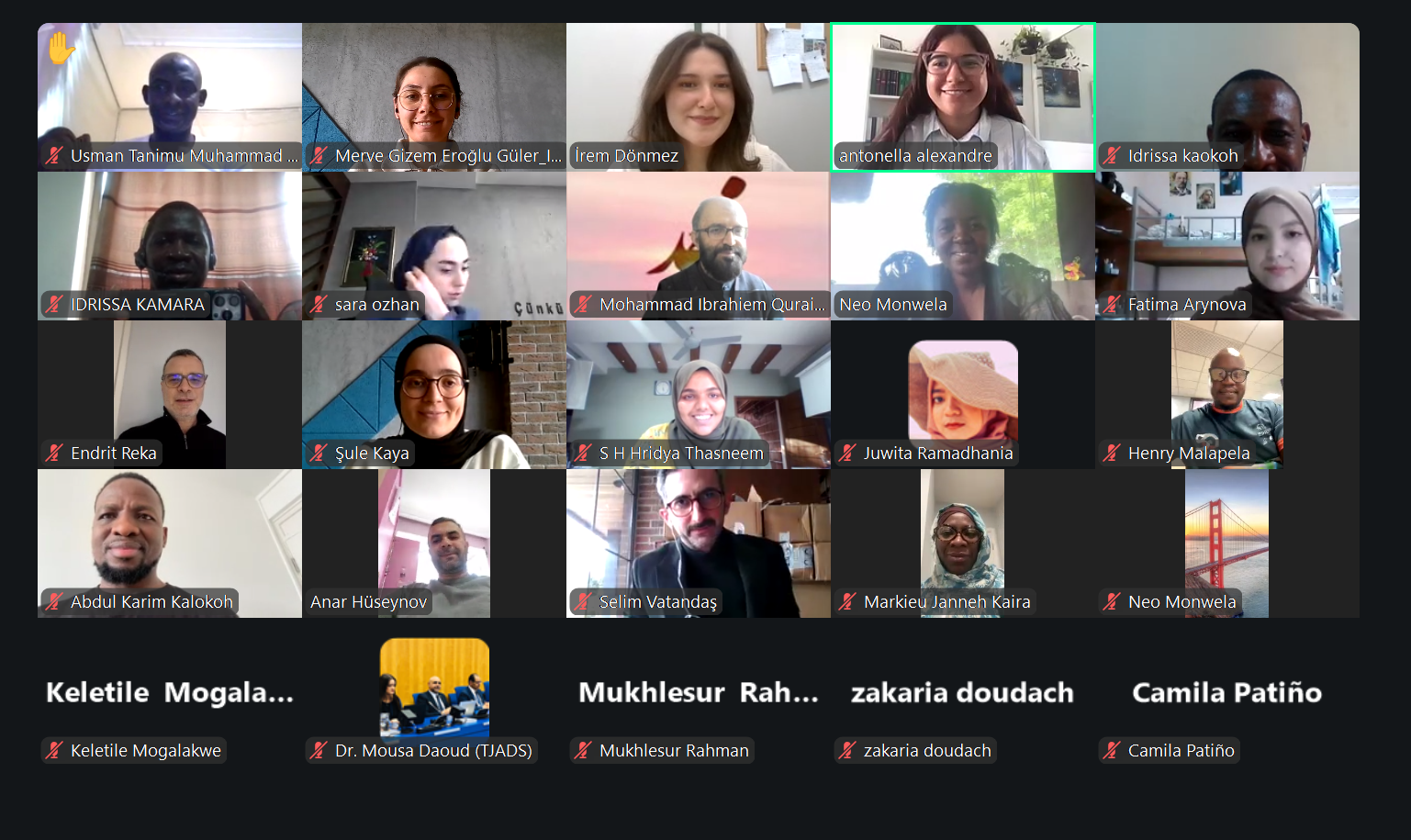
The first meeting of the IFGC Scientific Working Group was held on June 12, 2025, bringing together the experts dedicated to advancing addiction prevention through research and evidence-based practices. Participants discussed the group’s primary focus whether it should lean more toward research or training and agreed on the importance of a data-driven approach, particularly in evaluating prevention efforts. The group officially adopted the name “Scientific Working Group”. Members were invited to share suggestions to help define the group’s goals, potential focus areas, and structure.
The second meeting took place on July 10, 2025, continuing discussions on advancing global addiction prevention research. Members agreed that the group should focus primarily on research activities, differentiating from other IFGC working groups focused on capacity building and funding. They highlighted the need to adapt and evaluate the Turkish Green Crescent’s TBM addiction prevention training program in diverse cultural contexts, emphasizing impact assessments in new countries. The group stressed addressing data gaps, particularly in emerging areas such as digital addiction, and discussed ethical and logistical considerations for multi-country online surveys. Behavioral addictions, including digital addiction and online gambling, were identified as promising common research topics.
The third meeting was held on August 14, 2025, focusing on electing the group chair, refining research priorities, and identifying funding opportunities. Alexandre Kieslich (Green Crescent Brazil) was elected as Chair to lead agenda preparation and group motivation. The discussion emphasized selecting a common research topic, such as addiction prevalence, prevention mapping, and data gaps. Members were tasked with reviewing funding calls and preparing research topics for applications.
The fourth meeting took place on August 28, 2025, focusing on developing a concrete research proposal for the Hetzler Foundation Research Fund 2026. Members agreed to target adolescents in schools for the study, proposing interventions via teachers supported by pre- and post-tests, with a pilot across multi countries. The group discussed balancing focus between substance use and digital addiction, emphasizing flexibility to adapt based on feasibility, and advocated adapting existing programs such as the Turkish Green Crescent’s or UNODC’s CHAMPS program. Emphasis was placed on using digital tools both as research methods and as topics of study. Members committed to drafting 1-2 page concept notes for their research project application.
The fifth meeting of the IFGC Scientific Working Group, held on September 18, 2025, focused on reviewing research concept notes for the Hetzler Foundation Research Fund 2026. Members discussed country-specific proposals from Brazil, Nigeria, and Malaysia, addressing methodological, ethical, and financial considerations while emphasizing collaboration and the use of digital tools. Each country outlined distinct approaches to adolescent mental health and substance use prevention through technology-based interventions.
The sixth meeting of the IFGC Scientific Working Group, held on October 15, 2025, focused on progress updates and final preparations for research proposals under the Hetzler Foundation Research Fund. Partiipants presented their project designs addressing addiction prevention and treatment through educational, digital, and community-based approaches. Discussions centered on methodological rigor, budget alignment, ethics procedures, and compliance with foundation requirements.
The seventh meeting of the IFGC Scientific Working Group, held on October 29, 2025, focused on reviewing and refining draft research proposals from Brazil, Indonesia, Malaysia, Nigeria, and Nepal for submission to an upcoming foundation call. Participants provided detailed peer feedback on methodological clarity, budget justification, innovation, and compliance with technical and formatting requirements. Each team received specific guidance on improving proposal structure, ensuring accurate funding declarations, and integrating measurable outcomes. The group agreed to finalize all proposals and complete the applications.

All rights are reserved 2026 © International Federation of Green Cresent
Personal Data Protection Policy
Terms and Conditions
Copyright 2026 © International Federation of Green Cresent