
...
Select a Country
Search Results
KOKU” (5)

Sorry, we couldn't find the content you were looking for.
Want to try another word or term?

Logo

Green Crescent Addiction Prevention Training Program Returns with Online Training in 2025

image
Calendargraymini

24.09.2025

Green Crescent Addiction Prevention Training Program Returns with Online Training in 2025

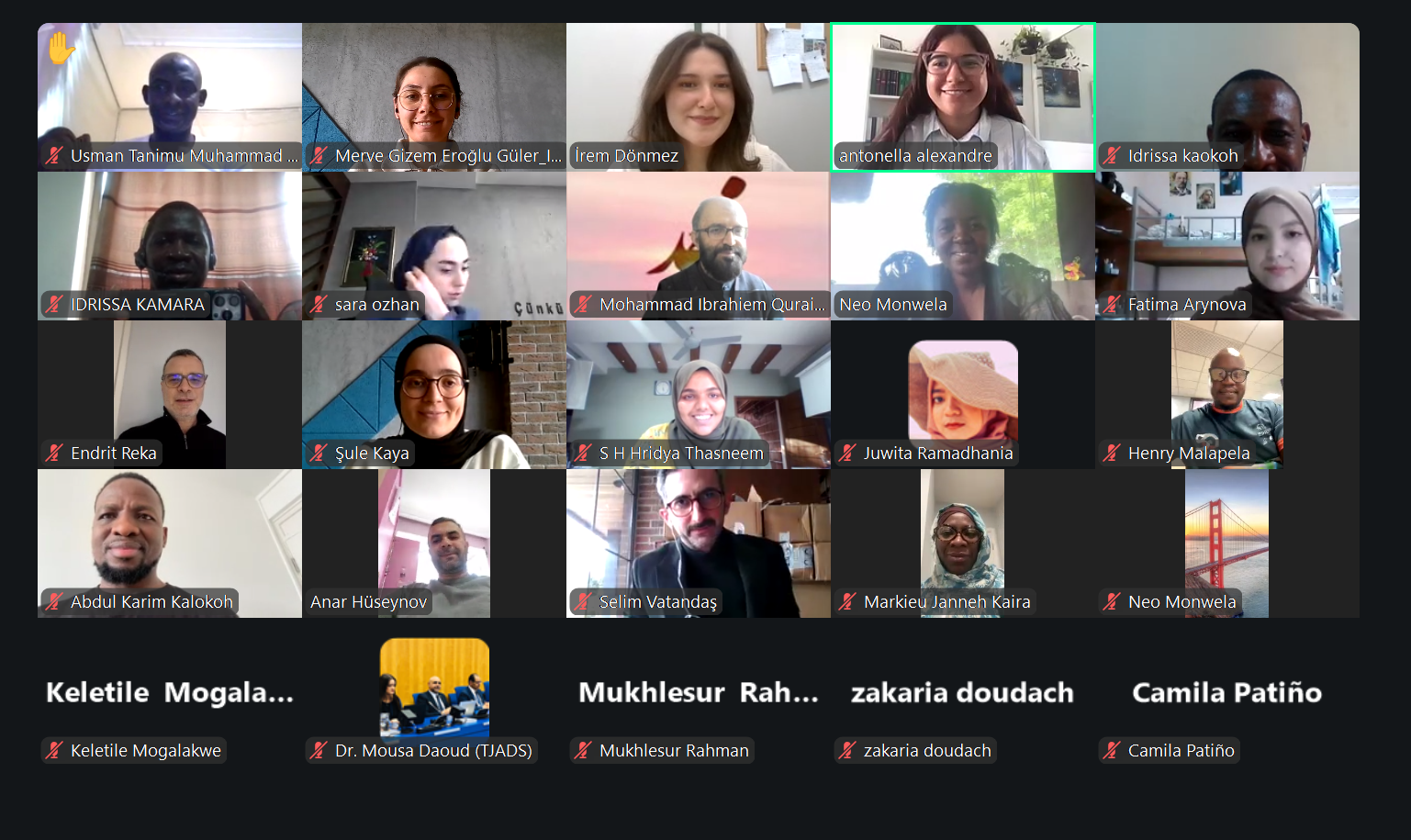
The International Federation of Green Crescent (IFGC) is pleased to announce the return of the Green Crescent Addiction Prevention Training Program, a society-based global preventive training initiative. TBM has been updated to feature interactive, easy-to-apply, and dynamic content. Following its last online edition in July 2023, this will be the first international training delivered with the updated content.

📌 Training Date: 4–5 October 2025 | 09:30 to 17:15 Turkey Time (GMT+3).

📌 Deadline for submission: October 1, 2025

📌 Program agenda will be shared at a later date.

📌 Training program will be in English [Spontaneously translated to French by AI].

📌Eligibilty Criteria  

  • Country Green Crescent representatives
  • Professionals working in collaboration with the IFGC, including psychologists, psychiatrists, healthcare workers, educators, related professionals.

Applications from other professionals not currently working with IFGC or Country Green Crescents will be considered based on capacity.


ADDICTION PREVENTION TRAINING PROGRAM

The Green Crescent Addiction Prevention Training Program (TBM) is a primary prevention program developed by the Green Crescent in 2014, consisting of modules on technology, gambling, tobacco, alcohol, and substance addictions, and healthy living. It is designed to raise awareness across the whole society on these issues, with a special focus on children and young people, while also training volunteer trainers who can further disseminate the program.

This training is open to Country Green Crescent representatives and professionals working in collaboration with the IFGC (psychologists, psychiatrists, healthcare workers, educators, and related professionals). Applications from other professionals not working in collaboration with the IFGC or the Country Green Crescents will be accepted based on capacity.

Upon successful completion of the training, participants will be certified as practitioners of the program, authorized to deliver its content to their local participants.

Following the training, all participants are expected to implement the TBM program in their communities. Their activities will be monitored once throughout the year to ensure effective application and continuity of the program.

Aim

The aim of TBM is to prevent alcohol, tobacco, substance, gambling and technology addictions and to raise awareness on healthy living among the entire society, especially children and youth. The objectives of the program are as follows:

  • Raise society awareness of preventing addictions,
  • Contribute to a safe, and healthy lifestyle in the society,
  • Improve acknowledgment on alcohol, tobacco, substance use disorders, and other risky behaviours, gambling, and technology addictions,
  • Advocate protective, and preventive approach.
  • Train volunteer trainers to deliver and disseminate the program in their communities

The Green Crescent Addiction Prevention Training Program provides modules designed for different stages, such as pre-school, primary school, secondary school, high school, and adults, starting from the age of 4.

The TBM implementation materials were authored by renowned experts, and academics in the field. All TBM training content is based on solid, and reliable scientific foundations.

Tools

  • Books, guides, brochures, presentations, posters, short films, additional materials
  • Distance learning system, Education Portal (tbm.org.tr), animations (videos)

Outcomes

Through the TBM Practitioner Training for Country Green Crescents, it is expected that participants will conduct local awareness trainings in their own countries using TBM modules, thereby expanding the program’s impact at the national level. The training also aims to strengthen the expert capacity of Country Green Crescents in delivering addiction-related education, while enhancing the international visibility and effectiveness of the Green Crescent.

The program consists of the following sessions:

  • Introduction to Green Crescent Prevention Efforts and TBM,
  • Addictions in a Changing World, Chemical Addictions,
  • Behavioral Addictions,
  • Principles of Implementing Adult Training Content,
  • Prevention Perspective and Healthy Living in Addictions,
  • Applications of Adult Training Content,
  • Effective Presentation Techniques,
  • and Participant Presentation Practices.

In this context, the training is designed not only to provide knowledge but also to improve participants’ skills in effective presentation techniques and adult education.

Important Note
To receive certification, participants must attend all training sessions and pass the final exam


📌 Addiction Prevention Training Program is free of charge.

📌 If you have any questions about the program, you can contact us at info@ifgc.org 


More Latest News

...

The International Federation of Green Crescent (IFGC) has taken significant steps throughout 2026 to strengthen international cooperation, institutional capacity, and global advocacy through its active Working Groups. The Scientific Working Group, the Fundraising and Project Management Working Group, and the Advocacy and International Collaboration Working Group have collectively contributed to expanding IFGC’s engagement and visibility at the international level. Established on 12 June 2025, the IFGC Scientific Working Group has advanced international research cooperation through a series of structured meetings. To date, the Group has convened eight meetings, bringing together representatives from Green Crescents in Brazil, Indonesia, Malaysia, Nepal, and Nigeria. During this process, all participating countries independently developed and submitted research proposals reflecting their national priorities in addiction prevention and treatment, marking the first fully self-led international funding application undertaken by Green Crescents. The eighth meeting of the Scientific Working Group, held on 23 January 2026, focused on refining the Group’s draft roadmap. Discussions highlighted the potential cultural adaptation of the Turkish Addiction Prevention Programme (TBM) as well as opportunities for strengthened international cooperation. The meeting also explored the Working Group’s potential role in supporting IFGC’s collaboration with international organizations such as the World Health Organization (WHO), the United Nations Office on Drugs and Crime (UNODC), and the International Organization for Migration (IOM), particularly in the development of evidence-based project concepts and the identification of regional and thematic priorities. The IFGC Fundraising and Project Management Working Group has served as a collaborative platform to enhance the fundraising and project management capacities of Country Green Crescents, guided by principles of transparency, inclusiveness, and collective accountability. Throughout 2025, the Group held four online meetings addressing shared challenges in grant access, proposal development, compliance, reporting, and project implementation. The election of Dr. Mousa Daoud, President of the Jordan Green Crescent, as Chair further strengthened coordination and collective learning among member organizations. Launched in December 2025, the IFGC Advocacy and International Collaboration Working Group has focused on reinforcing IFGC’s engagement within United Nations platforms, particularly the Commission on Narcotic Drugs. Through a series of online meetings, members coordinated advocacy efforts related to written and oral statements, side event planning, sponsorship mechanisms, and thematic priorities aligned with public health–oriented drug policies. Discussions also emphasized broader advocacy opportunities beyond the CND and highlighted the importance of coordination with other IFGC Working Groups to ensure coherent, credible, and sustained international advocacy.  

Read More
...

The International Federation of Green Crescent (IFGC), in cooperation with the World Health Organization (WHO), successfully held the 3rd IFGC–WHO Meeting on Addictive Behaviours: Public Health Aspects and Diagnostic Procedures for Disorders Due to Addictive Behaviours from 10 to 12 December 2025 at Sepetçiler Pavilion in Istanbul. The meeting brought together leading global experts to address the public health implications of behavioural addictions, with a particular focus on gaming and gambling disorders. Throughout the discussions, participants emphasised that while not everyone who engages in gaming or gambling experiences harm, a significant proportion of individuals face psychological distress, functional impairment, and disruption to family and social life. With the growing global recognition of gaming disorder and gambling disorder, experts underlined the urgent need for effective prevention strategies, early identification mechanisms, and accessible treatment services. Since both disorders were formally included in the International Classification of Diseases (ICD-11) in 2019, governments and health systems have been called upon to respond using evidence-based and standardised tools. In this context, the meeting focused on strengthening public health responses by improving diagnostic procedures and promoting evidence-based assessment instruments. Early identification and accurate diagnosis were highlighted as central components of a comprehensive public health approach. Particular attention was given to the WHO collaborative project on international screening and diagnostic tools, which was first launched in Istanbul in 2017. A key outcome of this ongoing work, the draft Diagnostic Interview Schedule for Disorders Due to Addictive Behaviours (DISDAB), formed a central focus of the 2025 meeting. The meeting hosted 55 experts from 22 countries, including WHO Türkiye Representative Dr. Tasnim Atatrah, WHO Headquarters specialists Anja Busse and Dzmitry Krupchanka, internationally recognised academics and clinicians, seven Country Green Crescent representatives, and five members of the Turkish Green Crescent Scientific Committee. Three Days of In-Depth Discussion Day One – Global Context and Recent Developments (10 December 2025)The meeting opened with remarks by IFGC President Prof. Dr. Mehmet Dinç and WHO Türkiye Representative Dr. Tasnim Atatrah, followed by invited speakers. Sessions introduced the mission of IFGC and outlined the objectives of the meeting. Discussions addressed epidemiology, public health protection frameworks, and treatment interventions, alongside recent global developments such as regulatory innovations, monitoring systems, and industry practices. The day concluded with a panel discussion on key barriers and priorities for action. Day Two – Diagnostic Procedures and DISDAB Validation (11 December 2025)The second day focused on diagnostic frameworks and assessment tools. Experts presented the ICD-11 diagnostic criteria, existing screening instruments, and updates from WHO’s collaborative project. A comprehensive presentation of the DISDAB tool was followed by in-depth discussions on psychometric evaluation, sampling strategies, and ethical considerations. In the afternoon, representatives from more than fifteen countries shared updates on planned implementation sites for the upcoming multi-centre international validation study. The day concluded with an official dinner at the IFGC Headquarters. Day Three – Challenges, Roadmap, and Future Cooperation (12 December 2025)The final day addressed anticipated challenges and risks related to the validation study. Participants worked collaboratively to define the roles of partner institutions and to develop a coordinated international roadmap for implementation. Further discussions explored broader needs in prevention, treatment, monitoring, and research. The meeting concluded with closing statements from WHO and IFGC. A Strong Tradition of Cooperation The collaboration between IFGC and WHO has a well-established history. A landmark meeting held in Istanbul in 2017 contributed to the inclusion of gaming and gambling disorders in ICD-11, followed by a focused workshop on gambling disorder in 2019. Building on this momentum, the 2025 meeting further strengthened global cooperation and marked an important step toward advancing international diagnostic standards and public health responses to behavioural addictions.  

Read More

All rights are reserved 2026 © International Federation of Green Cresent
Personal Data Protection Policy

Terms and Conditions

Copyright 2026 © International Federation of Green Cresent