




We use cookies to ensure you get the best experience on our website. Detailed information

Select a Country

Taking measures to prevent diseases, improve our health, and extend our lifespan

A disease affecting people from all walks of life

The condition where technology controls a person

Individuals may be referred to addiction treatment centers if deemed necessary

Promoting mental well-being by coping with stress and recognizing abilities
One of the most widely abused substances globally due to nicotine addiction

Activation of the brain's reward pleasure mechanism by repeating a certain behavior

Complete well-being physically, mentally, and socially
A product containing vaporized nicotine reported as harmful.

1.85 million out of 3 million deaths in 2017 were preventable.

The process of recovery by combating addiction
Inability to quit substances despite knowing the physical and psychological harms

Risking something valuable in hopes of gaining something more valuable

The beginning of the body's purification process after quitting substance use

The process of reintegrating into society healthily

The term behavioral addiction refers to an individual developing an intense attraction or compulsive inclination towards a specific behavior. These types of addictions arise when certain behaviors trigger the brain's reward and pleasure mechanism through repetition.
Addictions are typically divided into two primary categories: behavioral and chemical. Behavioral addictions represent situations where individuals experience discomfort, but the condition does not stem from substance use; instead, it revolves around specific behaviors. In such cases, individuals may find pleasure, relaxation and a sense of well-being when engaging in certain behaviors. However, if these behaviors lead to adverse outcomes, individuals may lose control over them, experience a weakened willpower and become mentally and physically consumed, indicating a behavioral addiction.

Individuals with addiction often find their behaviors psychologically satisfying or enjoyable. However, feelings of guilt, remorse or anger may follow, leaving them feeling helpless due to the consequences of their ongoing choices. Coping with behavioral addictions can be challenging, as individuals often struggle to quit or reduce a specific behavior or action without treatment or intervention, leading to unsuccessful attempts to quit.
Numerous studies in the literature highlight the distinction between investigating the action that triggers addiction and its pathological level of use, compared to chemical addictions. While chemical addictions are characterized by tolerance and withdrawal, these physical symptoms may not be as evident in behavioral addictions. However, they still manifest to some extent. For a behavior to be considered addictive, it must encompass criteria such as mental preoccupation, mood variability, tolerance, withdrawal, interpersonal conflict and repetition.
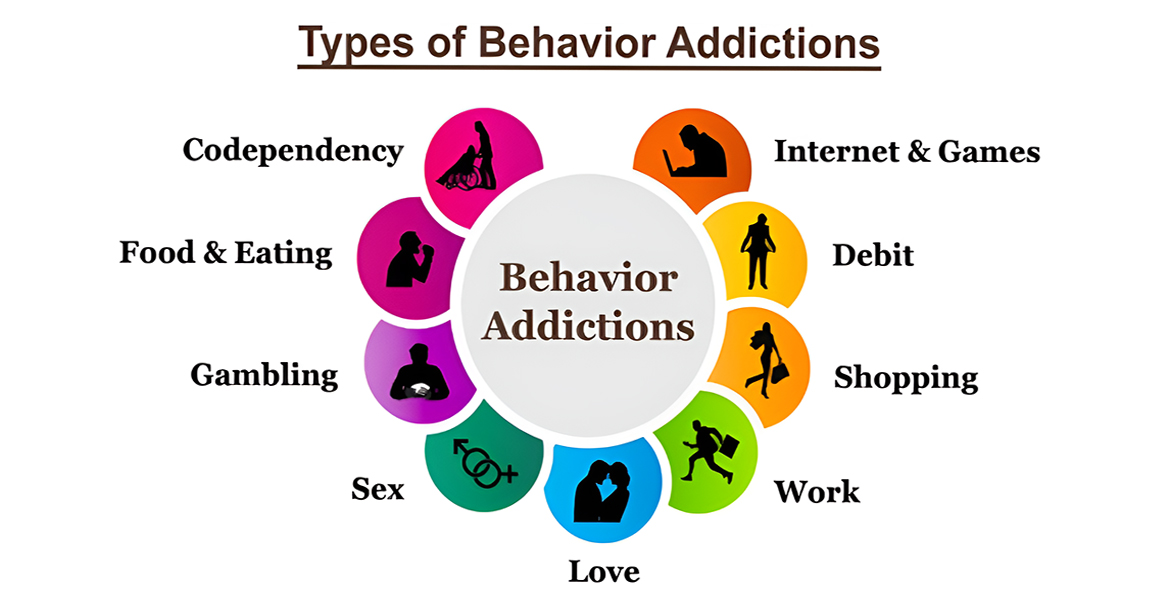

Key symptoms of behavioral addictions include an incessant need to engage in the behavior, persistence for longer periods and more frequently than planned, spending excessive time engaging in the behavior, unsuccessful attempts to control, quit or reduce it, negative consequences on work, family and academic success, efforts to increase the frequency and intensity of the behavior and feelings of tension, restlessness or anxiety when the behavior is not performed. Behavioral addictions, such as technology addiction, food addiction, gambling addiction and sex addiction, exhibit these defining characteristics.
At the core of behavioral addictions lies individuals' inability to resist the urge or allure of engaging in harmful actions towards themselves or others. Each behavioral addiction is characterized by a repetitive behavior pattern demonstrating this fundamental feature in a specific area. These behaviors interfere with functionality in other areas when repeated, resembling substance use disorders in this regard. Individuals with substance addictions report difficulty resisting the urge to drink alcohol or use drugs.
Both behavioral and substance addictions share many similarities in terms of their natural history, phenomenology and adverse outcomes. Typically emerging in adolescence and young adulthood, they are more prevalent in these age groups than in older adults. Both behavioral and substance addictions exhibit a natural course characterized by chronic and recurring patterns. However, many individuals can achieve self-recovery without formal treatment, a phenomenon known as "spontaneous remission".
There are noticeable similarities in how behavioral and substance addictions manifest. People grappling with behavioral addiction often describe experiencing a kind of urge or craving before engaging in their behaviors, much like individuals with substance use disorders. Additionally, these behaviors typically aim to alleviate anxiety and can result in a sense of euphoria or a "high," similar to substance intoxication. Emotional instability can contribute to increased cravings in both behavioral addictions and substance use disorders. For instance, individuals experiencing pathological gambling, kleptomania, compulsive sexual behavior and compulsive buying often mention a decrease in the positive effects of their behaviors with repetition or a need to intensify the behavior to achieve the same effect, similar to building a tolerance.
The inclination of behavioral addictions to trigger financial and marital problems mirrors similar challenges seen in substance use disorders. Individuals with behavioral addictions, much like those with substance use disorders, may resort to illegal activities to fund their addictive behaviors or cope with the repercussions of their actions.
For more detailed information on the topics covered in this section, you may refer to the following sources:
· Grant, J. E. (2010). Introduction to Behavioral Addictions. The American Journal of Drug and Alcohol Abuse, 36(5), 233–241.
· Murphy, E. (2023, May 26). Behavioral Addictions.
· Turkish Green Crescent Society
To answer your questions in the fields of Addiction and Public Health...

All rights are reserved 2026 © International Federation of Green Cresent
Personal Data Protection Policy
Terms and Conditions
Copyright 2026 © International Federation of Green Cresent