


...
Select a Country
Search Results
KOKU” (5)

Sorry, we couldn't find the content you were looking for.
Want to try another word or term?

Logo

TOBACCO ADDICTION

Tobacco addiction can be simply defined as the constant desire to use tobacco products and the inability to quit this usage. However, a more meaningful understanding of tobacco addiction can be achieved by examining it within a three-dimensional structure that includes neurochemical (related to nicotine) addiction, the psychological addiction dimension, and physical habits related to tobacco product consumption.

What Health Problems Does Tobacco Addiction Cause?

Tobacco use contributes to the development of the following diseases:

• Various types of cancer (lung, stomach, skin, cervical, etc.)

• Cardiovascular diseases

• Diabetes

• Respiratory diseases

• Gastric disorders such as gastritis and ulcers

• Dental and gum diseases

• Adverse pregnancy outcomes, including preterm birth, miscarriage, developmental disorders in children, and cessation of breastfeeding
Tobacco use is a critical public health issue, increasing both the overall disease risk and health burden of the population. According to the World Health Organization’s Global Tobacco Epidemic Report 2025, smoking is the leading factor that increases the risk of premature death. Among those who continue to use tobacco, nearly half may die as a result of its effects (World Health Organization, 2025).

...

 The main symptoms of tobacco addiction include:

Persistent tobacco use resulting in failure to fulfill major role obligations at work, school, or home (e.g., neglecting job responsibilities).

The original substance of tobacco is a dark liquid called nicotine, which is a colorless, bitter liquid and fundamentally a poison. Nicotine, which can also be produced synthetically, is used as an agricultural pesticide. The known side effects of tobacco include:

  • Decreased appetite
  • Increased blood pressure
  • Vascular blockages
  • Coronary heart disease
  • Obstructive lung disease
  • Cerebrovascular diseases and peripheral vascular diseases
  • What are the Effects of Tobacco Addiction?
  • It affects different parts of the central nervous system, leading to physical and psychological health problems. Some of these effects include:
  • Cardiovascular diseases
  • Lung diseases and COPD due to bronchial constriction
  • Vascular blockages and related strokes
  • Gastritis, ulcers, and stomach cancer
  • Yellowing of the skin, wrinkles, and skin cancer
  • Bad breath and yellowing of teeth
  • Smoking during pregnancy leads to premature birth and various developmental disorders.

After discontinuing the use of tobacco products, some positive developments in the body are as follows:

  • Nicotine begins to leave the body 2 hours after quitting smoking.
  • Heart rate and blood pressure start to decrease after 6 hours.
  • After 12 hours, toxic carbon monoxide from cigarette smoke is cleared from the circulation, allowing the lungs to function better.
  • Taste and smell senses sharpen after 2 days.
  • Within 2-12 weeks, circulation improves, making physical activities like walking and running easier.
  • Coughing, shortness of breath, wheezing, and lung strength improve after 3-9 weeks.
  • The risk of a heart attack is halved within 5 years.
  • After 10 years, the risk of lung cancer is halved, and the risk of a heart attack becomes the same as that of a person who has never smoked.

Tobacco use can cause serious health consequences not only for users but also for those who are not actively using tobacco. The toxins and other cancer-causing substances in tobacco products are released into the air from burning cigarettes, creating a toxic environment for people nearby. Therefore, the health of individuals exposed to tobacco smoke despite not using it themselves is of great importance. This exposure is referred to as passive smoking or secondhand tobacco smoke exposure. Secondhand smoke fills enclosed spaces when tobacco products such as cigarettes and hookahs are used. Inhalation of this smoke is called passive smoking.

According to the World Health Organization’s 2020 statement, exposure to secondhand tobacco smoke is particularly harmful at an early age. Approximately half of the world’s children breathe air contaminated with tobacco smoke, leading to serious health problems.

The dangers of passive smoking include:

  • Smoke from a burning cigarette contains around 4,000 chemicals and toxins, 50 of which are carcinogenic.
  • A cigarette burns for about 12 minutes, but a smoker only inhales it for about 30 seconds. The remaining smoke is inhaled by people nearby.
  • Smoke released into the environment is more harmful than the smoke directly inhaled by the smoker because it spreads at a lower temperature.
  • Environmental tobacco smoke contains three times more nicotine, 70% more tar, and 2.5 times more carbon monoxide than the smoke directly inhaled.
  • Children exposed to tobacco smoke have a higher risk of respiratory problems, including asthma, bronchitis, colds, middle ear issues, and reduced lung function.
  • Approximately two-thirds of a cigarette is released into the air.

For more detailed information on the topics covered in this section, you may refer to the following sources:

• 101 Questions on Addiction (2019). [Link: 101 Soruda Bağımlılık | Yeşilay (yesilay.org.tr)]

• World Health Organization. (2020). Tobacco: health benefits of smoking cessation. https://www.who.int/news-room/q-a-detail/tobacco-health-benefits-of-smoking-cessation

• World Health Organization. (2025). WHO report on the global tobacco epidemic, 2025: warning about the dangers of tobacco . [Link: https://www.who.int/publications/i/item/9789240088283

More Latest News

...

Ambassador Dr. Mehmet Güllüoğlu, Secretary General of the International Federation of Green Crescent (IFGC), visited Pakistan from 19 to 23 July 2026 together with Ergin Beceren, Director of the International Federation of Green Crescent, to meet with representatives of government institutions, Turkish organizations, international organizations and civil society in order to strengthen international cooperation in the field of addiction prevention and recovery. The programme began with participation in the roundtable titled "State of Drugs in Pakistan: Issues, Challenges & Response," hosted by the Karim Khan Afridi Welfare Foundation (KKAWF). The meeting brought together representatives of public institutions, educational organizations, international organizations, civil society organizations, experts, diplomats and members of the media. Discussions focused on the current situation of substance use in Pakistan, the key challenges in addressing addiction, prevention-oriented approaches, treatment and rehabilitation services, and opportunities for international cooperation. In his remarks, Ambassador Dr. Mehmet Güllüoğlu emphasized that addressing addiction should not be limited to treatment services alone, highlighting the critical importance of strengthening prevention efforts and enhancing inter-institutional cooperation to achieve sustainable solutions. He also shared IFGC's experience and ongoing initiatives in different countries, presenting examples of international best practices. During the visit, the delegation also met with Major General Abdul Moeed, Commander of the Pakistan Anti Narcotics Force (ANF). The meeting provided an opportunity to learn about Pakistan's efforts in combating narcotic drugs while exchanging views on prevention strategies, opportunities for international cooperation and potential areas for future collaboration. The programme also included separate meetings with Ms. Saliha Tuna, TİKA Islamabad Programme Coordinator; Mr. Harun Küçükaladağlı, Pakistan Country Representative of the Türkiye Maarif Foundation; and Mr. Eren Miyasoğlu, Pakistan Country Coordinator of the Yunus Emre Institute. The discussions focused on education, prevention initiatives, capacity building and institutional cooperation, while exploring opportunities to develop joint projects in the field of addiction prevention and recovery. The delegation also visited the Greenfield Hospital of Psychiatry Rehabilitation Centre, where they received information on the institution's addiction treatment and rehabilitation services and exchanged views on good practices in the field.  

Read More
...

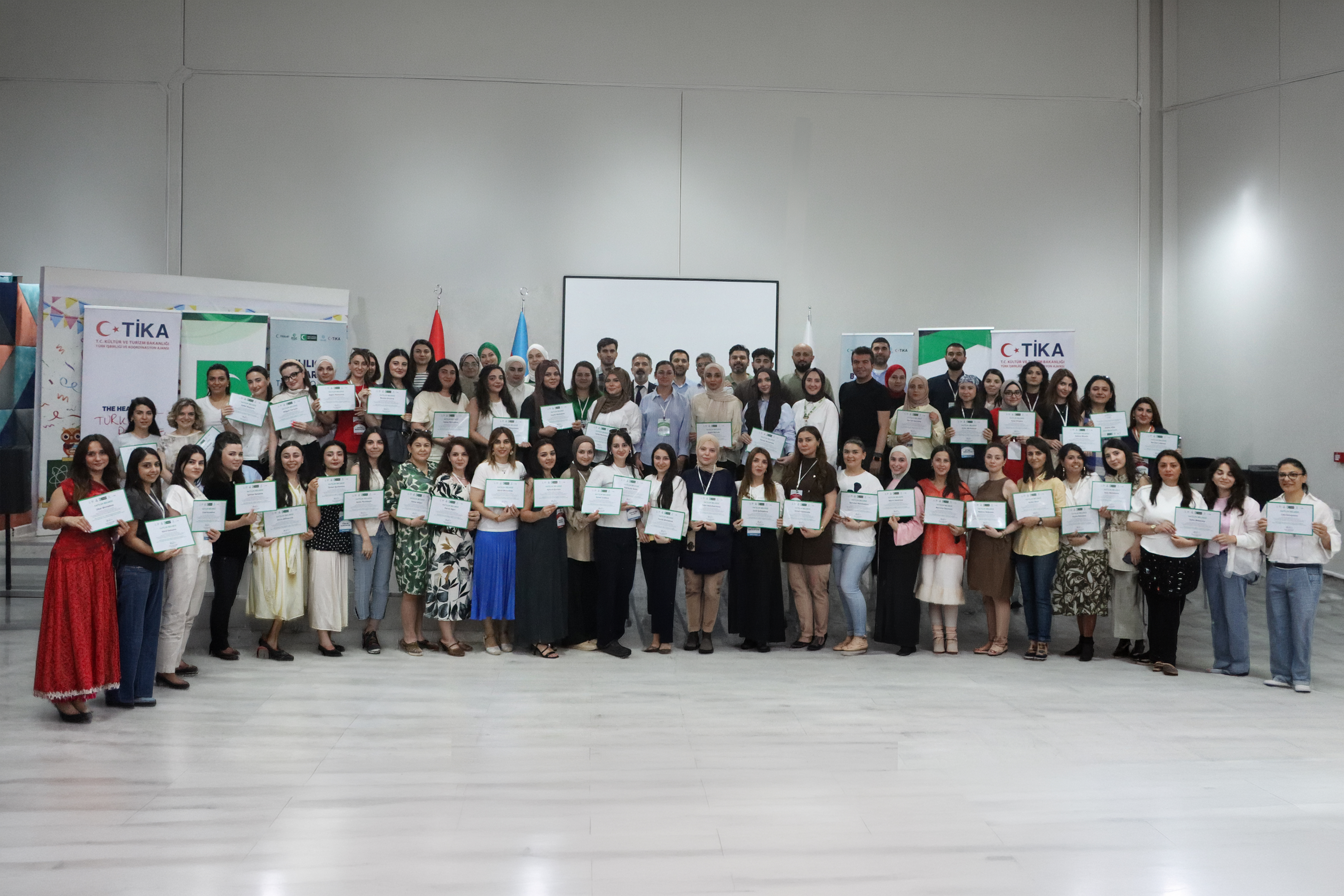
The Green Crescent Addiction Prevention Practitioner Training Program (TBM) was successfully held in Baku, Azerbaijan, from 22 to 25 June 2026, through the collaboration of the International Federation of Green Crescent (IFGC), the Turkish Green Crescent Society, the Turkish Cooperation and Coordination Agency (TİKA), the Turkish Maarif Foundation, and the Green Crescent Azerbaijan (Zərərli Vərdişlərə Qarşı İctimai Birliyi). Conducted in Turkish over four days at the Baku International Maarif Schools Youth Campus, the training program brought together 81 participants, including teachers, school psychologists, orphanage volunteers, and dormitory supervisors, with the aim of strengthening their knowledge and practical skills in addiction prevention. The comprehensive curriculum covered a wide range of topics, including the The Green Crescent Addiction Prevention Training Program (TBM), contemporary trends in addiction, adult education methodologies, principles of effective prevention practices, and substance- and behavior-related addictions, including alcohol, tobacco, drugs, technology, and gambling. The program also featured practice-oriented training sessions designed to enhance participants' capacity to implement prevention activities within their communities. Coordinated by the International Federation of Green Crescent and delivered by expert trainers from the Turkish Green Crescent Society, the program provided an important platform for strengthening professional competencies, promoting evidence-based prevention approaches, and encouraging the exchange of knowledge and experience among practitioners. Beyond enhancing individual capacities, the training represented another significant milestone in fostering international cooperation in the field of addiction prevention. By bringing together institutions and practitioners from different sectors, the program contributed to the development of a shared prevention perspective and reinforced collaborative efforts to build healthier and addiction-free communities. The trained practitioners are expected to deliver addiction prevention awareness sessions across Azerbaijan, helping to strengthen prevention efforts at the community level.

Read More

Contact Us

We would like to evaluate cooperation opportunities and communicate for joint projects.

Our Focus Points

To answer your questions in the fields of Addiction and Public Health...

All rights are reserved 2026 © International Federation of Green Cresent

Personal Data Protection Policy

Terms and Conditions

Copyright 2026 © International Federation of Green Cresent